
There’s a common misconception that if you never had a diagnosed concussion, you’re “in the clear” in terms of any impact to your brain. However, researchers are increasingly asking a different question: what about the hits that didn’t cause lasting symptoms?
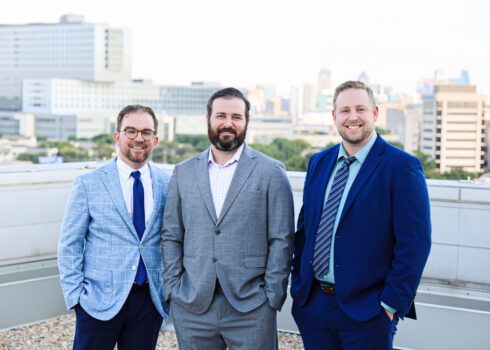
In a recent appearance on the Learning From Leaders podcast, Dr. Jeff Schaffert, an Assistant Professor in UT Southwestern’s Department of Psychiatry, shared how his team is using blood biomarkers, advanced MRI, and detailed cognitive testing to look for early, subtle signs of brain change in former collegiate football players.
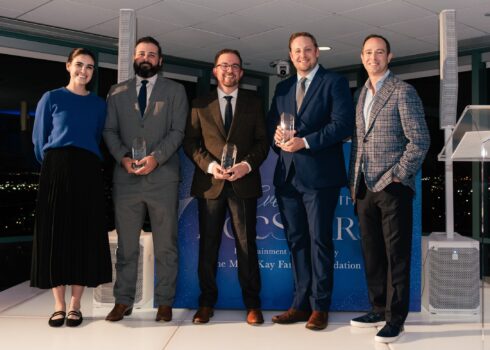
This work is made possible in part by a $50,000 Early-Stage Research Grant awarded to Dr. Schaffert in 2025 by The Cary Council, a group of community leaders supporting promising physician-scientists with seed funding to help them gather pilot data needed to compete for larger federal research funding.
Key Takeaways
- “Subconcussive”(or non-concussive) hits may add up over years, even without classic concussion symptoms.
- Dr. Schaffert’s pilot study focuses on middle-aged former collegiate football players, a group that’s been studied far less than NFL retirees.
- The study combines cognitive tests + blood-based markers + MRI to see if there’s an early “signal” worth studying on a larger scale.
- Brain health isn’t only about your genetics or what happened decades ago. Exercise, cardiovascular health, sleep, and lifestyle still matter at any age.
Prefer to Watch or Listen?
“I get asked a lot … if I would let my children play football, and I would. I don’t think we have enough evidence to suggest that the harms outweigh the benefits yet.”
Jeff Schaffert, Ph.D.
Why Repetitive Head Impacts Matter (even without a concussion)
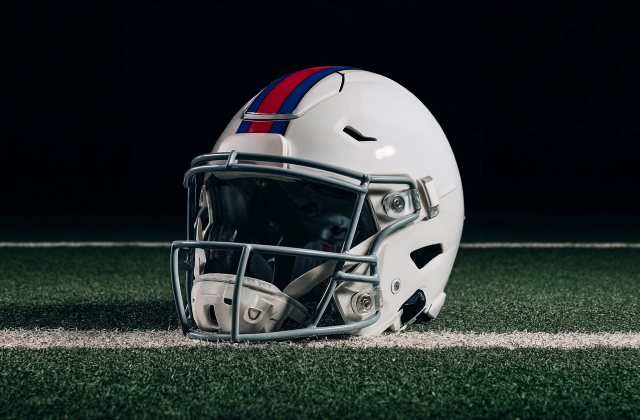
When most of us hear “brain injury,” we think of the obvious scenarios: a hard fall, a car crash, or something along those lines. These offer a clear diagnosis, with much more research on how those events will impact a patient later in life. Contact sports such as football or boxing raise a quieter possibility: repetitive head impacts (RHI) that may not trigger symptoms in the moment, yet occur hundreds (or thousands) of times over a playing career.
Dr. Schaffert described these as hits “below the threshold of clinical detection.” Not necessarily concussions, but repeated impacts that can accumulate over time.

So why is this question about the role of repetitive impacts in brain health so hard to answer? Because the outcomes researchers worry about, such as dementia, occur for many reasons and often decades later. That’s why studies that look for earlier biological signals matter: they can help scientists understand what changes (if any) show up 10–20 years after play, before trying to connect the dots at 30–40 years later. Outside the lab, organizations focused on sports safety also emphasize reducing these non-concussive impacts in a variety of ways: improved helmet designs, delaying contact for younger athletes, eliminating unnecessary contact drills, and changing rules to name a few.
Inside the Study: Blood Biomarkers, MRI, and Cognitive Testing in Former Athletes
So what does The Cary Council–funded project actually do?
Dr. Schaffert’s pilot study is designed to be feasible for busy adults because the targeted demographic is people in their 30s to 50s with jobs and families. Participants complete portions remotely and come in for a focused in-person evaluation.
The Big Three Measurements
1. A Detailed Exposure Interview
Instead of simply asking “How many years did you play?”, the study collects more nuance: practice structure, contact frequency, and other details that help estimate total exposure to repetitive head impacts.
2. Neurocognitive Testing
Participants complete standardized testing that can detect subtle differences in:
- processing speed
- memory
- executive function (planning, problem-solving)
3. Blood Draw + Advanced MRI
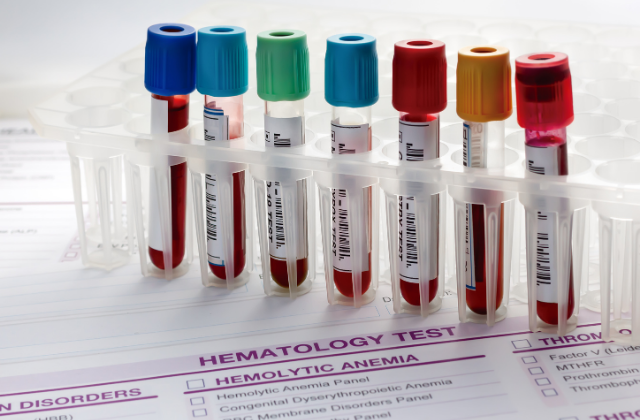
This is where the science is moving fast. New blood-based technologies can help measure proteins and inflammatory markers associated with brain processes.
Dr. Schaffert discussed looking for signs of neuroinflammation and proteins linked to neurodegeneration, specifically tau, a protein involved in multiple brain diseases.
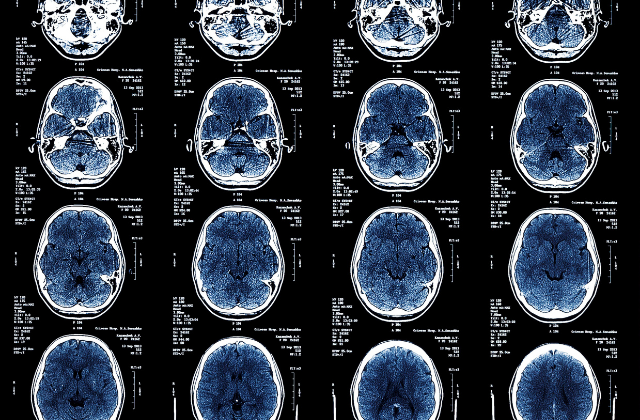
On imaging, the team plans to evaluate cerebral blood flow and white matter integrity, using advanced diffusion approaches that examine the brain’s pathways, or connections that help regions communicate.
Why This is a Pilot Study (and why that’s a good thing)
With a smaller sample size, the goal isn’t to make sweeping declarations or change how parents and players approach the risks of playing football. It’s to answer: Is there a signal worth chasing? And can the team recruit, measure, and analyze the data well enough to justify a larger, more definitive study? Essentially, they’re hoping to develop more hypotheses based on their findings.
That pilot step is critical to compete for larger NIH/NIA-level grants, and it’s exactly the kind of scientific “launch pad” early-stage philanthropy can provide.
What We Know vs. What we’re Still Learning About Brain Injury and Dementia Risk
Dr. Schaffert offered an important framing: “brain injury” is a spectrum, ranging from mild concussion to severe brain injury. And the strength of the dementia link varies across that spectrum.
Here’s where broader research aligns with his explanation:
- Moderate to severe TBI is associated with increased risk of dementia later in life through more extensive diagnosis, documentation, and research studies.
- The link between mild TBI/concussion and later dementia is more mixed, partly because mild injuries are often under-documented and harder to study.
- With repetitive head impacts, or subconcussive impacts, researchers are still working to understand how to measure and correlate thresholds, along with interacting factors such as genetics and other health risks.
In other words, the science is evolving. That’s exactly why Dr. Schaffert believes studies in non-NFL groups matter to better understand the effects of repetitive head impacts. As Dr. Schaffert put it, the NFL represents a tiny fraction of all people who have played football. His work aims to help answer the question families ask all the time: What are the risk factors for playing contact sports, such as youth football? Or high school and college football? This covers a much larger population.
A Balanced Message for Families: Mitigate Risk, Don’t Lose The Benefits of Sports
One of the most practical moments in the conversation came when Dr. Schaffert discussed what he tells parents and families when they ask, “Would you let your kids play football?”
He doesn’t argue that contact sports are “bad.” In fact, he emphasized the benefits: community, leadership, discipline, plus the built-in habit that is a key factor in good brain health over time: regular physical activity.
That aligns with major prevention thinking in dementia research reported in journals like The Lancet. Across the lifespan, modifiable factors such as physical activity, cardiovascular risk management, and a healthy diet can influence brain health outcomes to the tune of 30-40% of cases being preventable, according to Dr. Schaffert. Dr. Schaffert also stressed nuance: there’s a big difference between a child playing youth football and someone who played 10–15 years at the NFL level with extensive exposure to repetitive head impacts.
Leadership Lesson: Science is a Team Sport
Lead investigators are just that: Leaders. So, great researchers can’t simply put their heads down in the lab and discover the next big breakthrough all on their own. They need collaborators and teams that support their studies. That means understanding leadership on a human level and working as a team toward a common goal of discovery.
Dr. Schaffert’s approach to leading collaborative research was refreshingly straightforward: build a great team, communicate well, and make the work sustainable.
He explained that science isn’t just about the principal investigator. It’s about the people recruiting participants, building databases, managing protocols, and keeping everything consistent.
“You get 0% of the funds you don’t apply for.”
Jeff Schaffert, Ph.D.
He also shared a mentorship philosophy many leaders can relate to. He strives to meet trainees where they are, learn their goals, and recognize that career paths change. Sometimes in surprising directions. That culture of mentorship matters, especially as Texas scales up investment in dementia research through initiatives like DPRIT (Dementia Prevention and Research Institute of Texas), a major statewide funding effort intended to accelerate discoveries and retain top talent.
Mission Tie-in: Why Early-Stage Research Funding Changes What’s Possible
Dr. Schaffert’s study is a perfect example of Southwestern Medical Foundation’s role in advancing medical progress: helping great ideas become fundable, scalable science.
The Cary Council’s Early-Stage Research Grants provide the seed funding that can:
- prove feasibility
- generate pilot data
- unlock follow-on support at the national level
That matters for North Texas and far beyond. Brain health challenges touch nearly every family. Better tools for detecting early change, refining risk, and guiding prevention can reshape how we care for athletes, aging adults, and future generations. When philanthropy backs early-stage discovery, it doesn’t just fund a single project, it fuels a pipeline of breakthroughs.
FAQs
What are repetitive head impacts?
Repetitive head impacts or RHIs are head impacts that occur repeatedly without concussion symptoms. These are sometimes called non-concussive impacts.
Can a blood test detect brain disease?
Some blood biomarkers can reflect processes linked to brain disease, but they’re still being validated and don’t diagnose conditions like CTE on their own.
Is there a definitive link between playing football and dementia?
Research is still evolving. Moderate/severe TBI is linked to higher dementia risk, while the long-term risk from sports exposure varies and is still being studied, especially for amatuer and youth athletes.
What’s the best daily habit for brain health?
Regular physical activity, cardiovascular health, and a healthy diet are consistently supported as protective factors for brain health.
Subscribe Now
Get more content like this straight to your inbox by subscribing to our quarterly InspireWire newsletter.