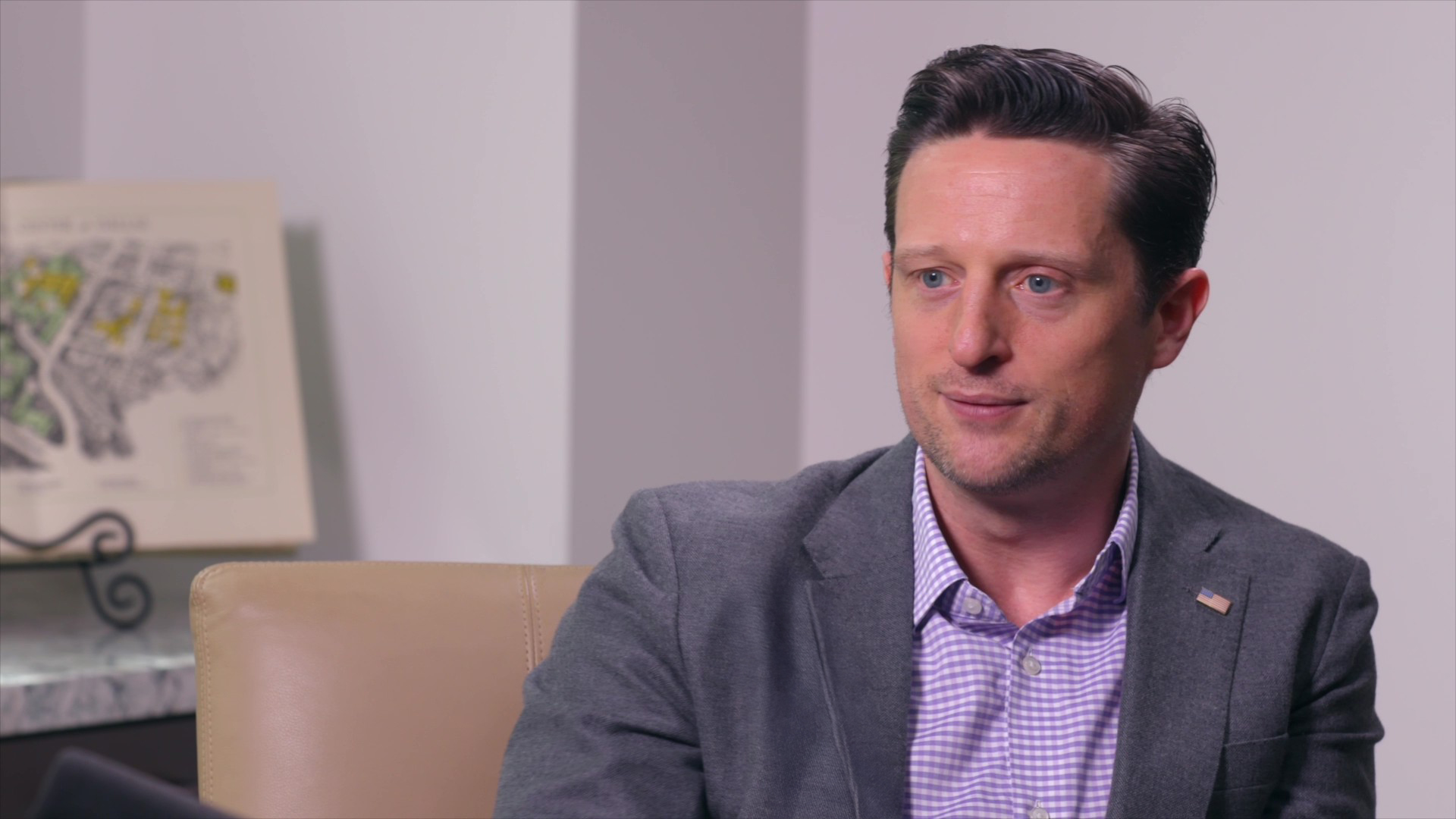
Shilo Brooks is President & CEO of the George W. Bush Presidential Center, where his work focuses on civic literacy, civil discourse, and principled leadership. He also hosts Old School, a podcast from The Free Press about books and how they shape our lives.
America’s 250th anniversary is more than a moment to look back. For Shilo Brooks, it is a chance to ask what kind of country we want to become next.
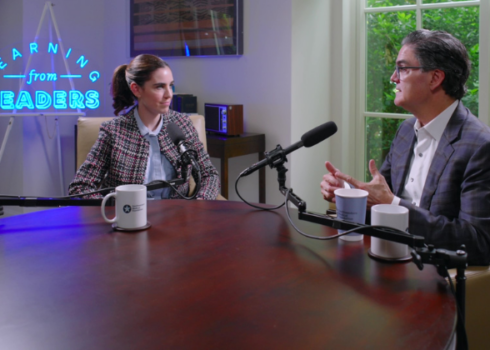
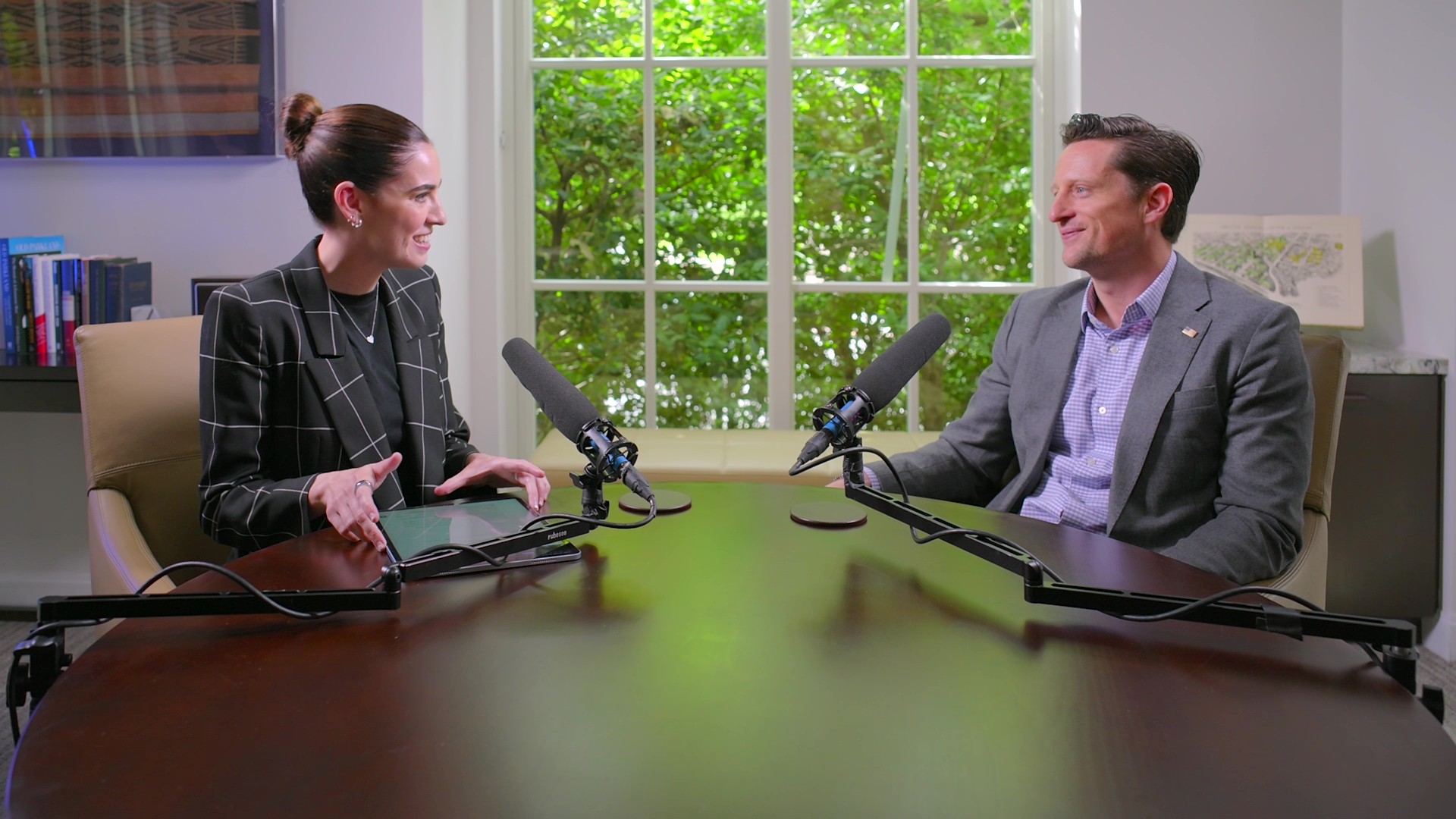
On the Learning From Leaders podcast, Brooks joins host Lili Clark for a conversation about civic leadership, the state of American politics, the role of philanthropy, and why everyday communities matter so much to the long-term health of self-government.
The episode moves from Abraham Lincoln and the Declaration of Independence to social media, books, President Bush, and even outlaw country music. But the heart of the conversation is simple: democracy is not something we watch from a distance. It is something we practice.
Key Takeaways
- America’s 250th anniversary is an invitation to reflect on what comes next, not just the past.
- Brooks believes better civic discourse starts with humility and goodwill.
- Local associations, nonprofits, schools, churches, and civic groups are essential to self-government.
- The Bush Center aims to model nonpartisan, values-based civic leadership.
- Great leaders are curious, humble, and willing to keep learning.
- Books can help leaders build empathy, imagination, and judgment.
Prefer to Watch or Listen?
An Unfinished Experiment in Democracy
Brooks sees America as an ongoing experiment. He points to Abraham Lincoln’s reading of the Declaration of Independence as a reminder that the promise of equality is not merely something to celebrate. It is something each generation must continue to prove.
“I think about America not as a country that’s finished. I think about it like Lincoln did as a propositional experimental nation whose future is still to be determined.”
Shilo Brooks, Ph.D.
That perspective shapes his work at the Bush Center. During this anniversary year, the Center is focused not only on America’s founding, but on the values that can help the country flourish for the next 250 years: freedom, opportunity, dignity, compassion, perseverance, and principled leadership.
Brooks is honest about the country’s current division. Politics can feel loud, angry, and deeply polarized. Technology has galvanized our divides in many ways. But he also urges that we seek historical perspective. America has endured profound conflict before, including a Civil War. The challenge now is to keep disagreement from becoming dehumanization.
Better Conversations Begin with Humility
Brooks’ advice for better civil discourse is refreshingly practical: begin by remembering that you may be wrong.
If people enter conversations knowing they are fallible, and if they treat the person across from them as reasonable and acting in goodwill, the tone changes. There is more room for nuance, compromise, and learning.
That lesson applies far beyond politics. It matters in boardrooms, classrooms, nonprofits, families, and community institutions. For Brooks, humility is not weakness. It is the starting point for more honest dialogue, better leadership, and stronger communities.
Why Clear Thinking Matters to Democracy
Brooks also worries that technology, especially social media and artificial intelligence, can weaken people’s ability to think for themselves.
For him, self-government depends on citizens who can reason, reflect, and form their own judgments. If something else is doing the thinking for us, he says, then something else is governing us.
“But self-government can’t happen if we don’t think for ourselves. If something else or someone else is thinking for us, they’re governing us, not ourselves.”
Shilo Brooks, Ph.D.
That concern is not only about politics. It touches nearly every part of modern life, from how people consume news to how they make decisions in business, education, philanthropy, and community leadership.
Brooks sees clear thinking as a civic responsibility. A healthy democracy requires people who can pause, question, listen, and make thoughtful judgments rather than simply react. That is why civic education matters. It is also why local community life matters.
Democracy is strengthened not only through national elections or public policy debates, but through the daily habits people build in their own communities: how they talk with neighbors, how they serve on boards, how they support institutions, and how they participate in shared problem-solving.
Self-Government Starts Close to Home
When Clark asks how “We the People” can shape policy, government, and civic culture, Brooks points to local civic life.
Drawing on political philosopher Alexis de Tocqueville, he explains that self-government often happens through everyday associations. These include school boards, churches, libraries, nonprofits, and neighborhood groups where people gather to solve problems and strengthen their communities.
In Brooks’ view, these local institutions are not secondary to democracy. They are where democracy is practiced most directly. People learn to listen, compromise, lead, serve, and work across differences in the places closest to them.
That makes philanthropy part of the same civic tradition. America’s universities, libraries, museums, presidential centers, and nonprofits have all been strengthened by people who give to institutions they believe can serve the public good.
For Brooks, this kind of giving is more than generosity. It is a way of participating in the country’s future. When people invest in institutions that educate, heal, preserve history, advance knowledge, and strengthen communities, they help build the civic foundation that self-government requires.
Principled Leadership Without Partisanship
At the Bush Center, Brooks wants that work to remain nonpartisan but not empty of principle.
The Center can stand for freedom, dignity, opportunity, compassion, and public service without becoming a vehicle for the politics of the day. For Brooks, that distinction is important. Civic institutions can help shape public character and civic understanding without chasing every political conflict of the moment.
That long view reflects what he admires about President George W. Bush’s leadership. Brooks describes him as a person of humility and integrity, someone who understands that public office is temporary, and service is larger than any one individual.
This kind of leadership asks people to think beyond personal ambition or short-term wins. It requires a commitment to values that endure: freedom, dignity, responsibility, service, and compassion. Those values are especially important in moments of division, when institutions must work to build trust rather than deepen distrust.
For Brooks, principled leadership also means knowing what role an institution is meant to play. The Bush Center can contribute to civic life by educating, convening, preserving history, and modeling thoughtful engagement. It does not need to become partisan to be meaningful. Its influence comes from consistency, credibility, and a commitment to the long game.
Source: George W. Bush Presidential Center.
The Leadership Power of Curiosity
When asked which characteristic effective leaders share, Brooks names curiosity.
He points to Winston Churchill, Abraham Lincoln, Theodore Roosevelt, and President Bush as leaders who kept reading, questioning, learning, and seeking competing views. For Brooks, curiosity is not a soft skill. It is central to wise judgment.
His own transition from professor to CEO has reinforced that lesson. In academia, people gather to hear your ideas. In leadership, he says, you have to listen to people who know more than you do in their areas of expertise. A strong leader trusts the team and keeps learning.
That kind of curiosity requires humility. Leaders must be willing to ask questions, admit what they do not know, and remain open to better ideas. They also have to resist the temptation to confuse authority with wisdom. The best leaders are not the people who always have the fastest answer. They are the people who know how to keep learning.
Brooks’ point is especially relevant for nonprofit, civic, and philanthropic leadership. These fields often require people to bring together many perspectives, manage complexity, and make decisions that affect communities over the long term. Curiosity helps leaders see more clearly, listen more deeply, and act with greater judgment.
How Books Shape Better Leaders
The most personal part of the episode comes when Brooks talks about books.
Through his podcast Old School, he asks guests about the book that changed, healed, or redirected their lives. His own answer is F. Scott Fitzgerald’s This Side of Paradise. As a young man from West Texas, unsure whether college was for him, the book opened his imagination to intellectual life, literature, and the possibility of Princeton.
Years later, he would teach there.
That is why Brooks believes reading is so important for leaders. Books allow people to enter lives, places, and experiences beyond their own. They expand empathy and judgment.
For Brooks, reading is not an escape from leadership. It is preparation for it. Books help leaders understand human motivation, moral complexity, history, ambition, loss, courage, and change. They make it possible to encounter perspectives far beyond one’s own immediate experience.
That idea connects naturally to his broader message about civic life. A democracy depends on people who can imagine the lives of others. Leadership depends on that same ability. Whether someone is leading a company, a nonprofit, a classroom, a foundation, or a public institution, empathy and judgment matter.
The rapid-fire round adds a lighter glimpse of Brooks’ personality. He loves outlaw country music because he sees it as storytelling. Given the chance to host one historical figure for dinner, he would choose Theodore Roosevelt for his vitality and curiosity. For visitors to the Bush Center, Brooks recommends exploring the Laura Bush Native Texas Park. He also describes himself as analog: he writes by hand, reads paper books, and values life in physical reality.
Civic Health and Community Health Are Connected
For Southwestern Medical Foundation, this conversation connects naturally to the importance of trusted civic institutions in North Texas.
The Foundation’s work to advance health, research, medical education, and community well-being depends on many of the same values Brooks names: trust, philanthropy, leadership, humility, and long-term stewardship.
Healthy communities require more than one sector. They need medical institutions, universities, nonprofits, libraries, museums, public leaders, philanthropists, and engaged citizens working toward shared progress. Just as civic life is strengthened by local participation and trusted institutions, community health is strengthened by people and organizations willing to invest in the future.
Brooks’ message is a timely reminder that civic health and community health are connected. When people think clearly, speak respectfully, participate locally, and support institutions that serve the public good, the whole region grows stronger.
That connection reflects the heart of Southwestern Medical Foundation’s mission. By advancing academic medicine, supporting innovation, and helping build a healthier North Texas, the Foundation participates in the same long tradition of civic responsibility Brooks describes. It is the work of looking beyond the moment, investing in institutions that matter, and helping communities flourish for generations.
FAQs
Who is Shilo Brooks?
Shilo Brooks is President & CEO of the George W. Bush Presidential Center, where his work focuses on civic literacy, civil discourse, public policy, and principled leadership.
What leadership quality does Brooks value most?
Brooks highlights curiosity. He believes strong leaders keep learning, seek competing views, and remain open to what others can teach them.
Why does Brooks emphasize civil discourse?
He believes better conversations begin with humility, fallibility, and treating others as reasonable people of goodwill.
How does this connect to Southwestern Medical Foundation?
The episode highlights trusted institutions, philanthropy, leadership, and civic health — all essential to building a stronger, healthier North Texas.
Subscribe Now
Get more content like this straight to your inbox by subscribing to our quarterly InspireWire newsletter.