
In biotech, when breakthrough ideas fail, it’s not only because the science is hard. They sometimes fail because some part of the system around the science fails, or is missing. Things like infrastructure, capital pathways, experienced advisors, and collaborative communities aren’t always the first thing scientists think about when setting out to discover something new. However, there is a biotech ecosystem in Dallas that is starting to capture the attention of researchers and business leaders alike.
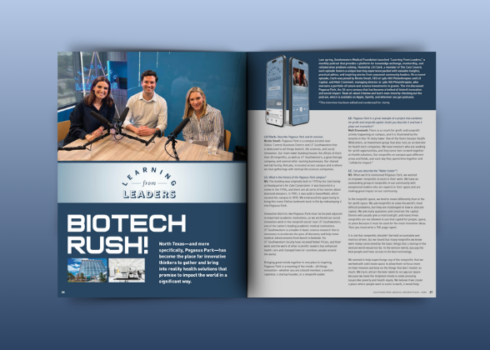
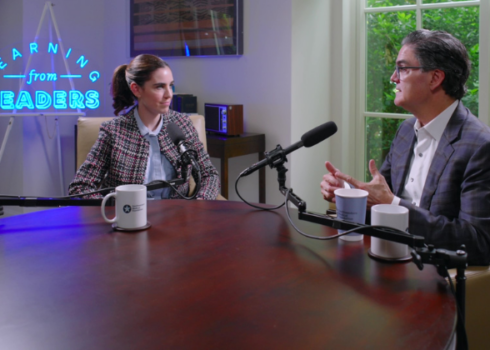
On a recent episode of Learning From Leaders, host Lili Clark sat down with Gabby Everett, Ph.D., Director of Business Operations and Strategy and Site Head at BioLabs Pegasus Park. Everett unpacks what it actually takes to build a thriving biotech ecosystem in North Texas, and why Dallas is increasingly on the radar for founders from across the country.
Gabby’s perspective is shaped by a career that started at the bench after receiving her Ph.D. in biochemistry and evolved into ecosystem building: recruiting early-stage companies, connecting them to critical resources, and creating the casual collisions that turn a collection of startups into a real community.
Key Takeaways
- Shared lab infrastructure helps startups avoid huge upfront costs and focus their capital on the science.
- Ecosystems are networks, not buildings. Success depends on partners, trust, and intentional connection.
- North Texas is attracting companies from outside the region and building the space for them to not only stay here, but also scale.
- Leadership in biotech requires resilience: experiments fail, plans change, and teams need psychological safety.
- The next growth frontier includes recruiting and retaining talent, plus smarter R&D tools like AI and automation.
Prefer to Watch or Listen?
“[Our goal is] to help our researchers and their companies survive this valley of death… help them survive long enough to where their science matters.”
Gabby Everett, Ph.D.
Building a Biotech Ecosystem Takes More Than Great Science
BioLabs is a global network of shared wet lab and office space, “coworking, but for science,” as Everett describes it. The North Texas location is at Pegasus Park and hosts a community of resident biotech companies working across areas like neurodegenerative disease and medical devices.
But Everett is quick to point out that BioLabs Pegasus Park is more than just an incubator. The real differentiator is the environment BioLabs Pegasus Park creates. The hallway conversations and the water cooler concept help facilitate collaboration among companies and people that may otherwise not interact.
That matters because early-stage life science companies are uniquely fragile. A typical startup can’t just rent any office and figure out the lab later. Building a functional lab from scratch requires specialized buildouts, safety requirements, and equipment – all of which are often needed long before the company has meaningful revenue or venture backing.

At BioLabs Pegasus Park, startups can:
- Sign flexible lease plans rather than signing long leases too early
- Access shared equipment that would otherwise be out of reach
- Connect to a broader network of advisors, vendors, and partners
Everett explains this as a way to help companies survive the biotech “valley of death,” that risky stage where the science is promising but not proven enough for large-scale capital investments.
One example she shares is the impact of shared equipment: founders don’t have to choose between buying essential consumables and running the decisive experiment that will de-risk their technology.
“If You Build It, They Will Come”: Why Dallas Is Attracting Biotech Founders
BioLabs Pegasus Park opened in March 2022, and the immediate interest and growth surprised everyone. Everett explains that early projections expected modest occupancy at first, but demand arrived quickly, signaling something bigger: biotech innovation was already here, but the platform to scale it wasn’t.

Startups began arriving from major coastal hubs historically tied to biotech ecosystems, such as Boston, New York, and California, and even internationally.
So what’s the draw? From Everett’s vantage point, North Texas is increasingly checking the full ecosystem checklist:
- Research strength and talent pipelines (including large universities producing STEM graduates)
- Trade organizations and advisory depth that helps companies find specialized expertise
- Growing access to capital and state-backed research engines, including the Cancer Prevention and Research Institute of Texas’s (CPRIT) long-term cancer research and prevention investment and the emerging Dementia Prevention and Research Institute of Texas (DPRIT) initiative focused on dementia and brain health
Leadership Lessons From the Lab: Resilience, Ownership, and Psychological Safety
Research is a field that really drives home the idea that failure is part of the process. Experiments fail more often than they work, and learning to return to the bench, revise the approach, and try again is exactly the kind of resilience Everett tapped into as she took on a leadership role outside of the lab.
When viewed through the startup lens, it’s almost essential for things to fail earlier in its existence. One, because those healthy mistakes can be moments to learn from and refocus, and two, because it’s cheaper to fail early before companies start to scale.
“[Mentors] don’t come after you and they don’t fall from the sky. You have to go out and find them.”
Gabby Everett, Ph.D.
She credits mentors who recognized that different people need different kinds of guidance, and a great mentor is one who champions you when you’re not in the room.
And for rising leaders in biotech (or any field), her advice is to network intentionally with people who are where you are, and with people who are where you want to be.
Bringing More Women Into Biotech Leadership
Everett also notes a leadership gap the industry still has to close: women make up a large share of the workforce but are underrepresented in senior leadership, especially in CEO roles.
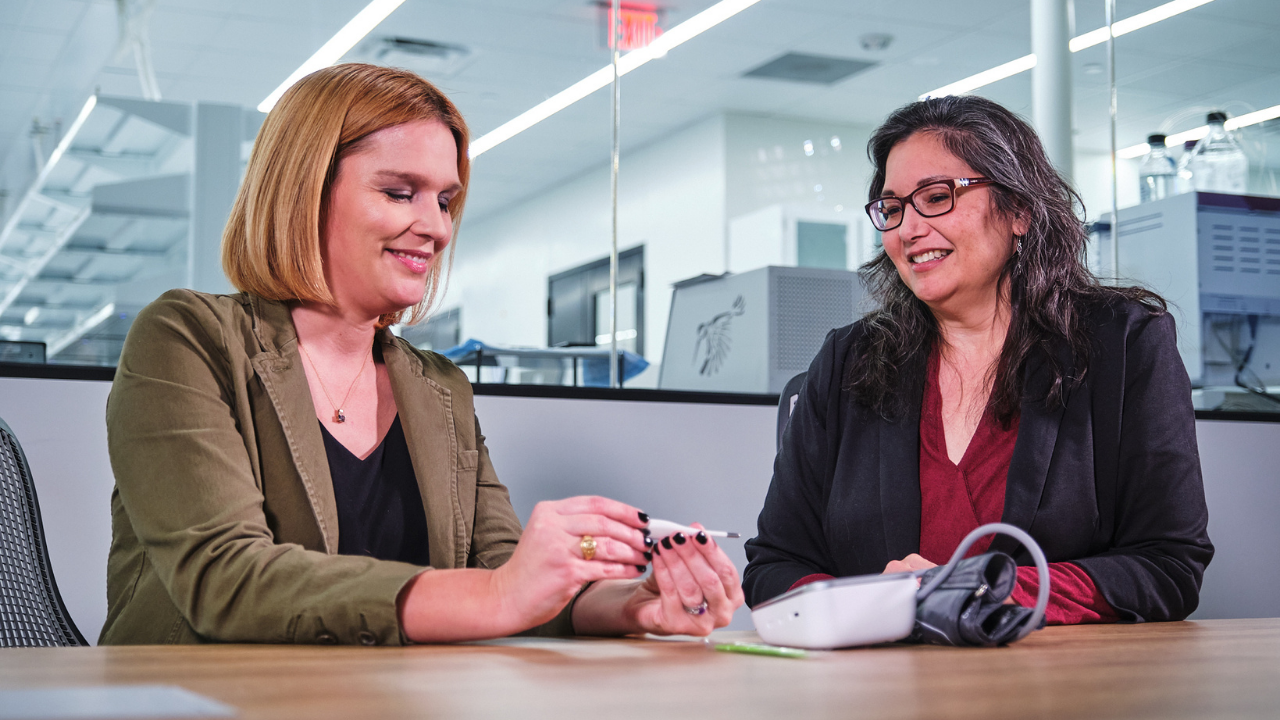
Her solution is practical and ecosystem-oriented:
- Pull graduate students and postdocs out of the lab and into networks earlier
- Increase access to role models, female founders, and leaders already building in North Texas
She also highlights workforce exposure as a multiplier. At BioLabs Pegasus Park, students have participated in day camps that range from simple DNA isolation demos to more advanced lab workflows and even business-side pitch exercises. The message: there are many ways to belong in biotech, not just at the bench.
What’s Next: Early-Stage Funding, AI, and Smarter Science
Looking ahead, Everett points to a few forces shaping biotech locally and globally. Startups remain risky, and bridging capital gaps through grants, seed funding, and stronger investor engagement helps more technologies survive long enough to prove their merit.
Another frontier is the shift toward AI-enabled biotech and automation. In Everett’s words, AI isn’t replacing scientists. It’s helping teams identify red flags sooner, improve clinical trial design, and learn faster from failures. Automation and high-throughput tools can also increase the output from repetitive, time-consuming tasks. This will effectively increasing the number of “shots on goal,” allowing lean teams to test more ideas in less time.
Why the Biotech Ecosystem Matters to Southwestern Medical Foundation’s Work
The Foundation exists to build sustainable support for innovative research, best-in-class medical education, and the highest standard of care. Additionally, the Learning From Leaders podcast was developed to elevate knowledge exchange and collaboration between civic, business, and medical leaders across North Texas.
That’s exactly what this conversation with Gabby Everett was all about. Medical breakthroughs don’t happen in isolation. They’re accelerated when researchers, entrepreneurs, clinicians, funders, and community partners have the infrastructure, trust, and desire to work together.
When North Texas as a whole strengthens pathways that help life science startups survive the earliest stages, this biotech ecosystem becomes the engine behind tomorrow’s therapies, diagnostics, and devices. That kind of progress aligns with the Foundation’s long-term commitment to advancing progress in medicine and ensuring great ideas can move from the lab and into patient care.
FAQs
What is BioLabs Pegasus Park?
A shared wet lab and office space designed to help early-stage life science startups grow with infrastructure, equipment access, and community support.
Why is shared lab space important for biotech startups?
It reduces upfront costs and lets startups run key experiments sooner, without raising millions just to build and equip a lab.
What makes a “biotech ecosystem” work?
Collaboration: founders need infrastructure, advisors, capital pathways, and a connected community that helps them solve problems quickly.
Subscribe Now
Get more content like this straight to your inbox by subscribing to our quarterly InspireWire newsletter.