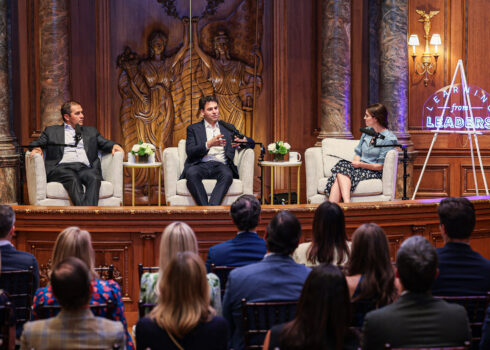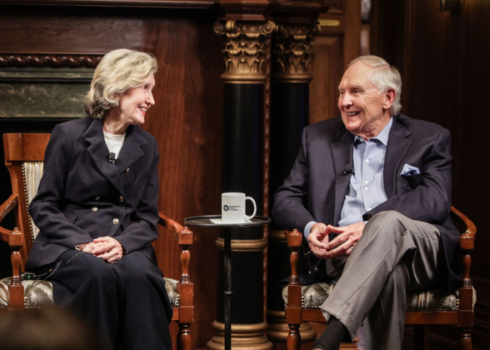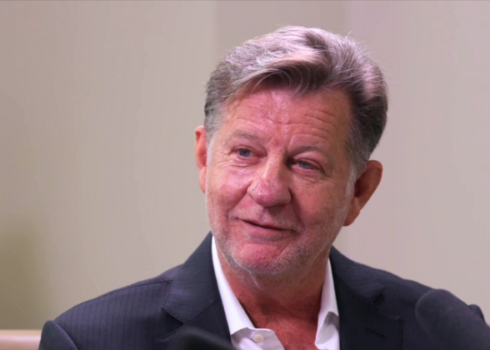

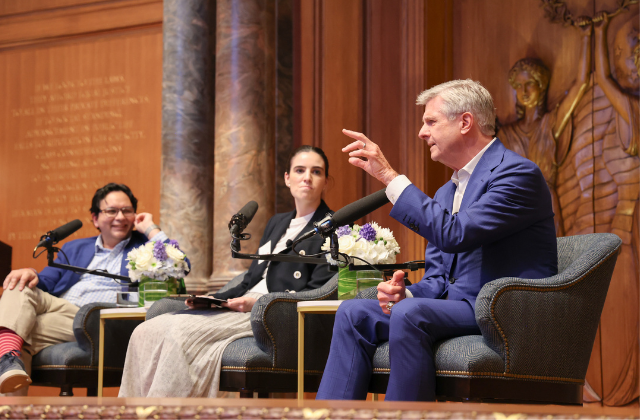
On April 8, 2026, The Cary Council gathered at Old Parkland for its annual Learning From Leaders program. This is the event that inspired the Learning From Leaders podcast, and this year’s event was even more special for two reasons: our featured guest was Rick Welts, the CEO of the Dallas Mavericks, and this was a collaborative event hosted in conjunction with the George W. Bush Presidential Center’s Young Professionals. The conversation was co-moderated by Lili Clark, Vice Chair of The Cary Council, and Andrew Kaufmann, Vice President of Communications and Marketing at the Bush Center and host of The Buch Center’s podcast, The Stategerist.
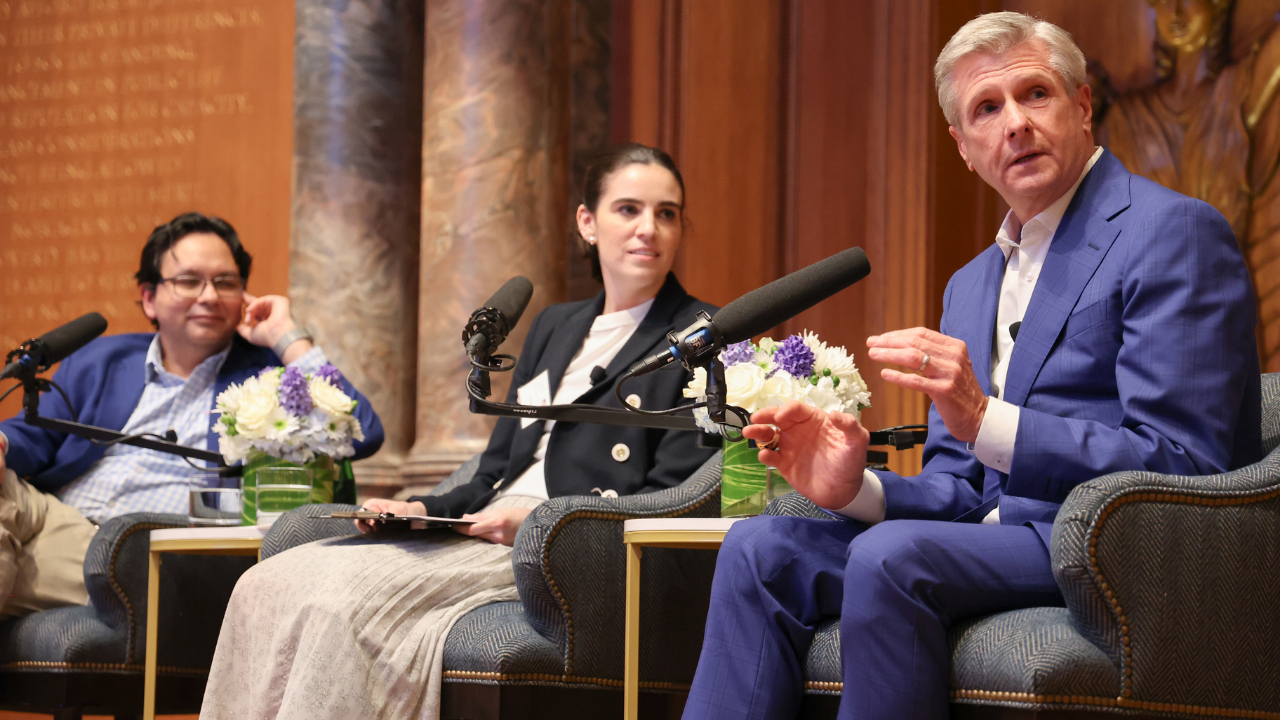
Welts joined the Dallas Mavericks in 2025, and he is already deep in the work of listening, rebuilding trust, and shaping a vision for what a franchise can mean to the city it represents. Guests were treated to a conversation with one of the most decorated NBA executives the game has ever seen, capturing Welts’ career-defining moments and the leadership habits he still leans on today.
Key Takeaways
- One conversation can change everything. Welts’ NBA journey began because he asked for an introduction and followed through.
- Culture is built intentionally and repaired the same way: with credibility, consistency, and community commitment.
- Listening earns trust faster than defending, especially when emotions are high.
- Great leaders stay curious and never settle for “because we did it last year.”
- Sports can be a force for good when organizations treat their platform as both a privilege and a responsibility.
Watch or Listen to the Podcast
A Welcome Rooted in Mission
The night began with a reminder of why The Cary Council exists: to engage the next generation of civic and philanthropic leadership in support of early-stage research at UT Southwestern Medical Center.
Founded in 2015, The Cary Council has awarded 24 Early-Stage Research Grants, helping investigators generate the early findings needed to compete for major funding. Those recipients have gone on to secure more than $30 million in follow-on support.
That context matters because leadership isn’t only a boardroom topic. It’s how discoveries get funded, how teams get built, and how a community decides what it wants to stand for.
From Ball Boy to the NBA Hall of Fame
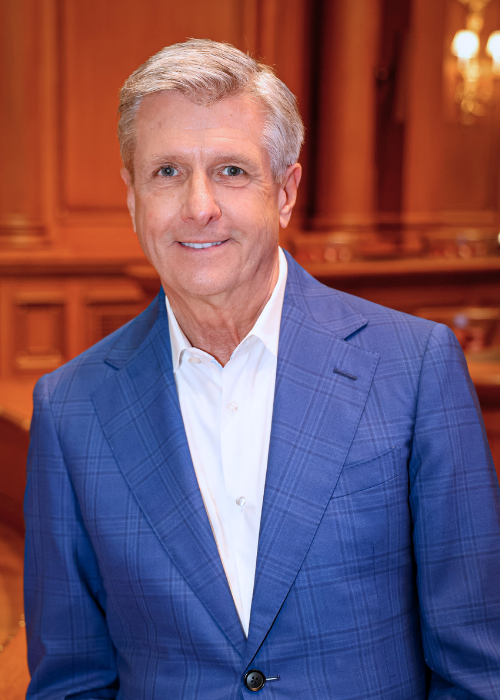
Welts’ story opens with a single turning point: as a teenager in Seattle, he landed a job as a ball boy for the newly formed expansion franchise, the Seattle SuperSonics. He convinced a classmate to introduce him to the right person at the right time. That day changed everything.
That role was more than just a job. It gave Welts unfettered access to the inner workings of an NBA franchise. It was his education. He described the locker room as a “master’s course” in professional sports: watching how players, coaches, medical teams, media, and ownership interacted.
Those early observations became a lifelong leadership advantage: Welts learned that high performance is fragile and that culture is a daily choice, not just a slogan.
Rick Welts on Culture, Credibility, and Trust
When Welts stepped into the CEO role, he was candid about the organization’s recent controversial past and clear vision about what must be protected going forward.
He pointed to the transformational impact of Cynt Marshall, who helped rebuild credibility and prioritize community engagement after a period of public scrutiny. Welts described honoring that legacy as a core responsibility of the team and his leadership.
He also described the opportunity in front of the franchise: a chance to grow the business and deepen community-facing work simultaneously.
“You got to listen…you have to not be defensive. You really have to accept how people are feeling and give them a platform to be able to express that.”
Rick Welts
CEO, Dallas Mavericks
Later, when asked about the Luka Dončić trade and navigating an emotionally charged fanbase, Welts returned to a simple discipline: listen. He said he needed to accept how people felt without getting defensive and create space for people to be heard. Then, you can start to earn back trust.

Dallas is Home: Envisioning What Comes Next
One of the most discussed topics of the evening was the Mavericks’ future home.
Welts described the ambition not as a single arena, but as a large-scale entertainment district anchored by the Mavs arena and designed to become a catalyst for broader development and community energy.
Welts said that when fans walk in for the first time, he wants them to think, “Wow, they get Dallas.”
Not a copy of another city’s landmark, but a distinct expression of the place the Mavericks represent through art, design, and the social spaces that shape how people gather. He called it a place where people go to make memories.
Health, Partnerships, and the Responsibility of a Platform
Welts mentioned the newly expanded partnership with UT Southwestern Medical Center. Serving as their official team doctors and medical provider, Welts described UT Southwestern as a “gem” in Dallas, and conveyed that the partnership is much more than just a logo and sponsorship dollars. It is part of a broader approach. He talked about how partnerships have changed over his career: in earlier eras, sponsorships often centered on signage and seats. Now, he said, the most successful partnerships are built around measurable impact that solves real problems and creates value for communities.
“It’s just an incredible privilege to have the platform that we have…and that comes with a responsibility and an opportunity.”
Rick Welts
CEO, Dallas Mavericks
Welts also highlighted the increasing focus on athlete mental health, noting how professional sports can help normalize these conversations, especially for young people watching closely.
Learning From Leaders 2026 Photo Gallery:
A Conversation with Rick Welts




Why This Matters to Southwestern Medical Foundation
At Southwestern Medical Foundation, we believe leadership is about building the conditions where others can do their best work. That’s exactly what The Cary Council advances through early investments in UT Southwestern researchers: giving innovators the initial support they need to test bold ideas and generate the proof that unlocks larger funding.
Welts’ message about intellectual curiosity, continuous improvement, and earning trust connects directly to that mission. Breakthrough research is rarely linear. It requires teams that can adapt, learn, and keep going when results are uncertain. Kind of like basketball.
When our community gathers in one room for conversations with sports leaders, young professionals, physicians, researchers, and philanthropists, we strengthen the network that makes discovery possible. And we reinforce a shared belief: Dallas can lead, not just in business and culture, but in the future of health.
Subscribe Now
Get more content like this straight to your inbox by subscribing to our quarterly InspireWire newsletter.
FAQs
Who is Rick Welts?
Rick Welts is the CEO of the Dallas Mavericks and a longtime NBA executive known for leadership roles with the NBA, Phoenix Suns, and Golden State Warriors. He is in the Naismith Memorial Basketball Hall of Fame.
What is Learning From Leaders?
Learning From Leaders is an annual in-person event hosted by The Cary Council and Southwestern Medical Foundation’s monthly podcast featuring conversations with community and business leaders about mentorship, innovation, and impact. You can watch/listen on the following platforms: YouTube, Apple, Spotify, Amazon, iHeart.
What is The Cary Council?
The Cary Council is a joint affinity group organized by Southwestern Medical Foundation and UT Southwestern Medical Center that supports early-stage research grants and engagement of next-generation civic and philanthropic leaders.
What are The Buch Center’s Young Professionals?
The Bush Center’s Young Professionals membership engages emerging professionals and offers members the opportunity to attend premium events, including thought-provoking discussions, social gatherings, and networking events. Learn more.
Where was the live recording held?
The event took place at Old Parkland in Dallas, bringing together The Cary Council and Bush Center Young Professionals.
How does Southwestern Medical Foundation support UT Southwestern?
Southwestern Medical Foundation originally established Southwestern Medical College in 1943, which would later become what we know as UT Southwestern Medical Center. The Foundation is now an independent public charity, with approximately 90% of its grants and distributions benefiting UT Southwestern, providing sustainable funding for research, medical education, and the highest standard of care.