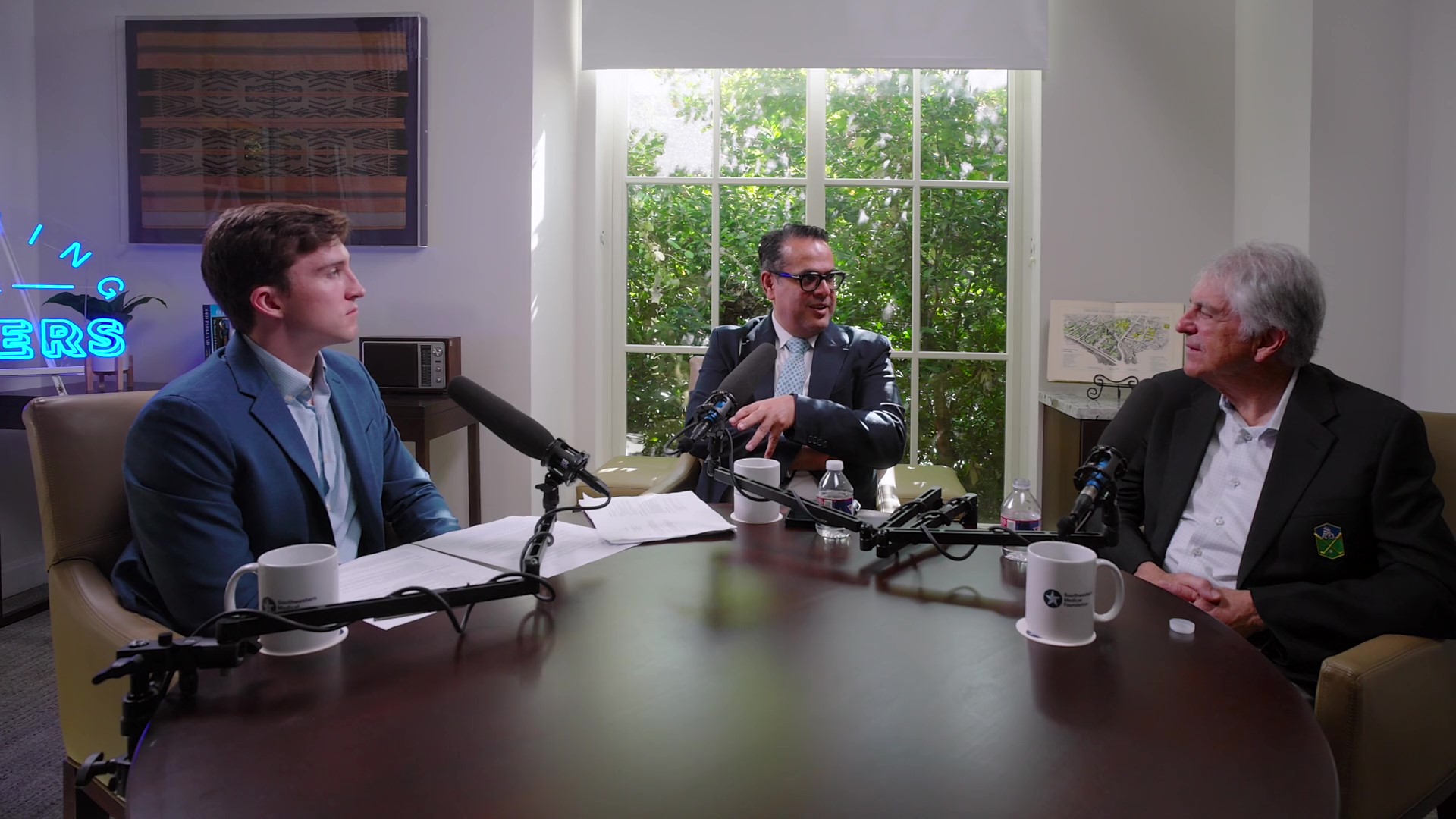
When public health is doing its job well, you may not even notice it. That’s the beauty, and challenge, of a field built on prevention, protection, and preparation. In a recent episode of the Learning from Leaders podcast, Richard Hoffman, M.D., M.P.H, and Saad Omer, M.P.H., Ph.D., M.B.B.S., shared powerful insights on the invisible yet vital impact of public health and why its future depends on collaboration, communication, and community.
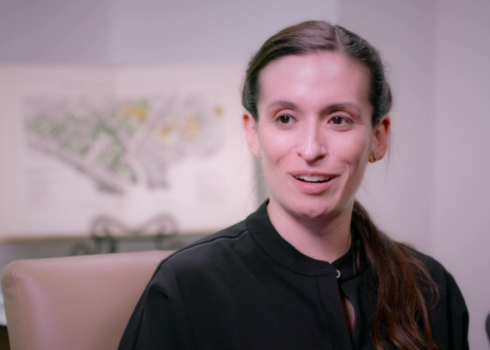
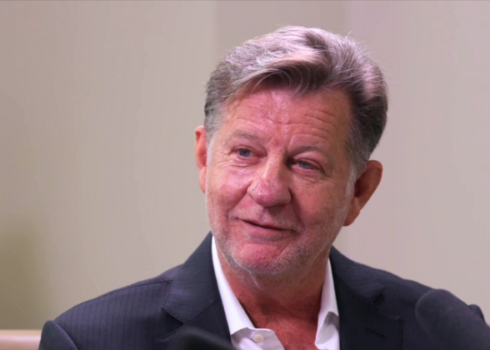
Dr. Hoffman, former Chief Medical Officer for the state of Colorado, and Dr. Omer, founding dean of the Peter O’Donnell Jr. School of Public Health at UT Southwestern, have spent their careers studying and improving health outcomes at the population level. Their conversation was not only a masterclass in public health fundamentals — it was also a glimpse into the heart of two leaders deeply committed to service.
“People often don’t realize how much of their health is protected by systems they never see.”
Dr. Richard Hoffman
What Is Public Health?
Dr. Hoffman offered a simple but profound definition: “In public health, the patient is the community.” It’s not about one-on-one doctor visits, but rather ensuring clean water, safe food, air quality, disease prevention, and injury reduction on a societal scale. Whether it’s childhood vaccinations, seatbelt laws, or restaurant safety inspections, public health quietly touches nearly every aspect of our daily lives.
“People often don’t realize how much of their health is protected by systems they never see,” Hoffman explained. “From airbags in cars to tuberculosis control programs, these are things we now take for granted.”
Dr. Omer expanded on this, highlighting public health’s unique role as both protector and predictor. “We don’t wait for fires to break out,” he said. “We’re like the firefighters — focused on prevention, but also ready to respond when crises arise.”
From Passion to Profession
Both experts came to public health from different beginnings. Dr. Hoffman described his initial career trajectory as one focused on clinical medicine. That changed when he joined the CDC’s Epidemic Intelligence Service in 1978. “It was like being a medical detective,” he recalled. “I got to investigate outbreaks, control epidemics, and see firsthand the power of prevention.”
For Dr. Omer, public health offered an irresistible mix of science, humanity, and purpose. “It’s a field that embraces science in service to people,” he said. “We study real-world problems and then work to solve them at scale.”
The Pandemic as a Wake-Up Call
Naturally, the conversation turned to COVID-19. For both doctors, the pandemic reinforced hard lessons and exposed systemic gaps.
“One of the biggest challenges during the early months of COVID was the lack of coordination,” said Dr. Hoffman. “We had local health departments, hospitals, and pharmaceutical companies all trying to do their part — but often without clear leadership or shared strategy.”
Public trust, or the lack of it, was another barrier. “People wanted clear answers, and public health officials were still figuring things out in real time,” said Dr. Saad Omer. “That eroded trust and we have to rebuild that.”
But there were bright spots, too. Both leaders praised the rapid development of vaccines, the advancement of wastewater surveillance, and the power of collaboration across disciplines. “When immunologists, engineers, and epidemiologists work together,” said Dr. Omer, “we can move mountains.”
Listen to the Podcast Episode
Building the Future at UT Southwestern
As founding dean, Dr. Omer is shaping a new kind of public health school — one rooted in what he calls “excellence for impact.” With a growing faculty and community partnerships spanning faith-based organizations, food security initiatives, and behavioral health, the school is already becoming a catalyst for change in North Texas.
“We’re training students to lead with science, heart, and skill,” he said. “That means giving them the tools to analyze data, engage with communities, and manage teams. It’s a blend of technical ability and human understanding.”
Dr. Hoffman, who helped endow scholarships for the school, echoed the importance of investing in future leaders. “The best way to protect public health is to train the next generation,” he said. “And I’m proud to be part of that effort.” Dr. Hoffman also supports this ideal in his position as an honorary trustee of Southwest Medical Foundation.
Why It All Matters
In a world still recovering from a pandemic and facing mounting health disparities, both speakers agree: public health has never been more relevant.
Texas, with its rural-urban divides, obesity rates, and behavioral health challenges, presents plenty of hurdles, but also hope. With advanced data systems, AI-driven research, and interdisciplinary training, the next frontier of public health is already here.
“Texas has Texas-sized challenges,” said Dr. Omer. “But we also have Texas-sized opportunities.”
Dr. Saad Omer
Whether through disease surveillance, vaccine innovation, or grassroots community engagement, public health isn’t just about emergencies — it’s about everyday wellness. And if these two leaders have anything to say about it, the field’s future will be smarter, faster, and more connected than ever.